Brick or Stone: Reading a Building Facade
Read a brick or stone facade through bonds, joints, texture and patches, so you can describe visible building details without mistaking them for a date.
The most common mistake when reading a brick or stone facade is treating one striking detail as a date stamp. A pale patch, unusual bond or darkened course can have several explanations, so begin with the wall’s visible arrangement rather than a guess about its age.
How does a brick facade organize the wall?
Brick is laid in horizontal rows called courses. The pattern made by the bricks and their joints is the bond: running bond, for example, staggers the vertical joints from one course to the next.
Look at the whole wall before focusing on a small area. Then compare the bond around doors, windows and corners, where a change in pattern may be easier to spot than a change in brick color.
Brick faces can vary in shade and texture across a single wall. Clay, firing and weathering affect appearance, so a shift from red to brown is a reason to look more closely, not a date in itself.
What do stone faces and joints show?
Stone may display grain, veins or mineral marks, while the edges of each block reveal how it has been cut or fitted. Notice whether the blocks form level courses, vary in size, or have rough faces beside smoother ones.
Mortar—the material between masonry units—also shapes the facade’s appearance. Recessed joints emphasize the edges of bricks or stones; mortar closer to the face makes the surface look more continuous.
For a clearer view of shallow marks, compare the wall in soft daylight with its appearance under stronger light. Shadows can make a joint seem deeper, so note the viewing conditions if you are recording a detail.
Where might a facade change because of repair?
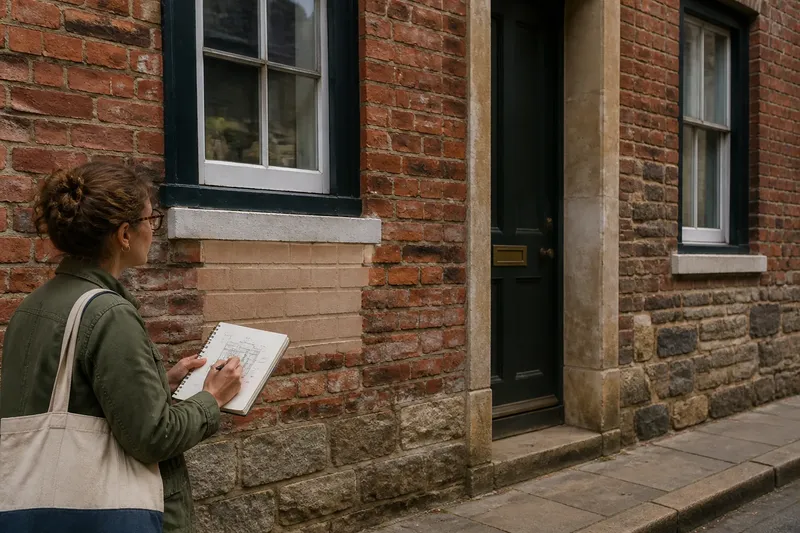
Look for interruptions around blocked openings, beneath windows, at corners and along narrow strips of masonry. A patch may differ from its surroundings in bond, mortar, surface finish or the size of the units; one difference alone does not identify why the work was done.
Imagine you see a pale rectangle below a window in a red-brick wall. You note that its bricks look smoother and its joints are a different color, then view it from the other end of the pavement; if both contrasts remain visible, your description can identify a distinct patch, while its date and purpose remain unknown.
A repair can also blend into the surrounding wall. In that case, the facade may offer no clear visual boundary, and a close inspection should not be forced into a more certain story than the surface supports.
How can you compare details on one facade?
Choose a few features that help distinguish one part of the wall from another. A phone photo, a quick sketch or a note can preserve their locations, especially when the building has several elevations.
- Bond: If the brick pattern changes around an opening, compare the courses on both sides; if the change is clear, describe the separate pattern, or note that the wall appears consistent if it does not.
- Joints: If mortar color or profile differs in one area, compare it with nearby joints; if the contrast repeats, record a joint change, or describe the joints as similar if it does not.
- Surface: If a stone face looks rougher or a brick smoother than its neighbors, check another nearby unit; if the contrast persists, describe the surface difference, or treat the first impression as isolated if it does not.
- Edges: If masonry changes at a window, door or corner, trace where the change begins and ends; if it forms a distinct boundary, record its location, or note that the transition is gradual if it does not.
- Color: If a patch looks lighter or darker, compare it under similar light; if the difference remains, record the color contrast, or avoid treating a shadow or wet surface as a material change if it does not.
- Position: If you notice a feature worth comparing, note its place on the facade; if you can locate it again, use that position in your description, or add a sketch when the location is unclear.
These choices produce a useful description without requiring a theory about the building. “Smoother brick in a rectangle below the left window” tells another reader more than an unsupported claim that the wall was rebuilt.
What do people ask about brick or stone facades?
Does brick bond reveal when a building was built?
No bond provides a dependable date on its own. Patterns can be reused or altered, so describe the arrangement rather than assigning an age.
Does a different-colored brick mean a repair?
It can mark a patch, but color may also vary across the wall or change with light and weather. Compare the bond, joints and surface before describing a distinct area.
Can stone texture identify the stone type?
Grain and veining can offer clues, but similar-looking materials may be difficult to distinguish by sight. If you lack a reliable basis for naming the stone, describe its visible texture instead.
Can the facade show what is behind the wall?
The exterior shows visible materials and their arrangement, not every hidden layer or structural connection. Keep claims about the unseen construction separate from what the surface displays.
How can you turn observations into a useful description?
Combine a feature with its location and a comparison: “recessed mortar along the lower right wall” or “rough-faced stone above the doorway, unlike the smoother blocks beside it.” These details let someone else find the same feature without relying on your interpretation.
Say you are looking at a hypothetical facade with regular running-bond brick above a shopfront and a short, smoother-brick strip beside its doorway. You record the bond above, the strip’s position and its smoother surface, then compare the strip with the wall on the other side of the entrance. If that wall matches the upper brickwork, your resulting description identifies a localized difference rather than claiming the doorway was altered at a particular time.
For a brick or stone facade, a precise account of courses, joints and surface changes is more useful than a confident date inferred from appearance. Record where a feature begins and what it differs from; leave its cause open unless another reliable source can answer it.